Places to Visit in Medina Münevvere
A
Alkış Turizm
Writer
visibility
1.899
schedule
8 Dk
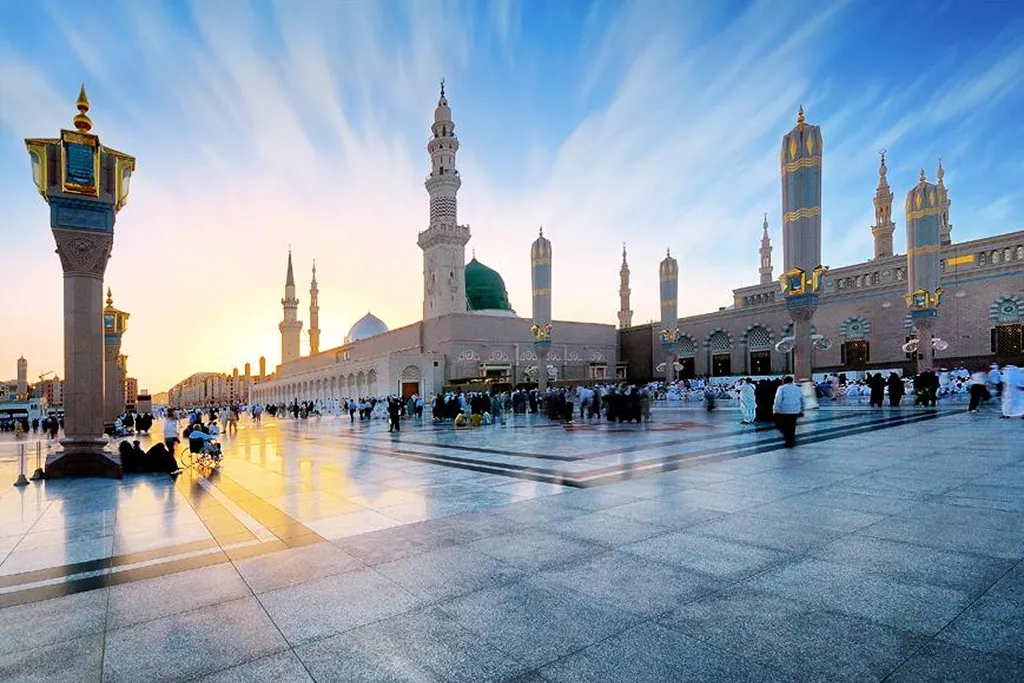
PLACES TO VISIT IN MEDİNE-İ MÜNEVVERE Medina-i Münevvere is among the important spiritual and sacred cities for Islam. Medina, the city where our Prophet (pbuh) passed from this world to the afterlife and where his blessed tomb is located, is a blessed city that was the center of the spread of our religion, Islam, after the migration. Islam spread all over the world from Medina-i Münevvere. In Medina, there are many memories, sacred places and places where many events took place from our Prophet, our religion and our beloved companions. In this article, we will try to provide information about these sacred places in Medina. MESCID-İ NEBEVÎ (PROPHET'S MOSJID) It is the mosque that our Prophet built with his companions immediately after his migration from Mecca to Medina. This holy place, which we know as Masjid al-Nabawi, is given the following names: Masjid al-Rasul, Masjid al-Sharif, Masjid al-Saadet. This mosque; After Masjid al-Haram, it is among the most virtuous and important mosques on earth, like Masjid al-Aqsa. When our Prophet (pbuh) migrated and reached Medina, they determined where the mosque would be built with their blessed camels. After the camel was released, the place where it stopped and collapsed was designated as a place of worship, and the land on which it was located was purchased from the sons of Neccar and its construction began. Our Prophet Muhammad Mustafa (pbuh) said, "Prophets are buried in the place where they died." For this reason, his wife Hz. Since they died in our mother Aisha's room, they were buried in the Masjid al-Nabawi, also known as the Prophet's Mosque. Our mother, Hazrat Aisha, also had their blessed father, Hazrat Abu Bakr, buried here. Likewise, Hazrat Omar is buried there because he requested that he be buried there before his death. Our Prophet (pbuh) said the following about the Masjid an-Nabawi: "You can only travel to these three mosques: Masjid al-Haram, this mosque of mine (Masjid an-Nabawi) and Masjid al-Aqsa" (Bukhari). Inside the Masjid an-Nabawi, between the Prophet's tomb and his pulpit, there is a sacred section called "Ravza-i Mutahhara", known as a piece of heaven. This area is 10 meters wide, 20 meters long and 200 square meters. Regarding the virtue of this area, the following is stated in a hadith reported by Abdullah Ibn Zayd al-Mazini and Abu Hurayra: "The area between my house and my pulpit is a garden from the gardens of Paradise" (Sahih Muslim). Masjid al-Nababi is a very important and holy mosque for us Muslims in these aspects and because it contains the holy tomb of our Prophet Muhammad Mustafa (pbuh), whose intercession we request. It is one of the most visited places during Hajj and Umrah travels. CENNETÜ'L BAKÎ Cennetü'l Bakî is a cemetery that was turned into a cemetery by our Prophet (pbuh) and is close to the Masjid an-Nabawi. 3rd Caliph of Islam, Hz. Our master Osman is buried in this blessed eternal cemetery. Hz. Together with our master Osman; Prophet's uncle, Hz. Abbas, his aunt Safiye and some of his grandchildren, the Prophet's son Ibrahim, his daughters Rukiye and Zeyneb, Hz. Our mother Fatima and her son Hasan are also buried here. Among those buried here; Fatima bint Asad, the mother of our Prophet Ali, whom our Prophet called "My second mother", and his blessed wives, one of the mothers of the believers. Our mother Aisha, Hz. Hafsa, Hz. Ummu Salama, Hz. Zeyneb bint Huzeyme, Hz. There are Zeyneb binti Cahş, Safiye, Reyhane and Mariye. Many Islamic elders from the Sahabe-i Kiram are buried in this cemetery. Abdurrahman b. Avf, Sa'd b. Ebû Vakkas, Abdullah b. Approximately ten thousand companions, including Mes'ud, Suheyb er-Rûmî and Ebû Huraira, and many followers and saints are buried here. Cennetü'l-Baki', which has reached 180,000 m2 with the expansions, is now used as the Medina cemetery. Our Prophet used to visit this cemetery from time to time and pray. As Alkış Turizm, we strive to visit this blessed town during both Hajj and Umrah trips. MOUNT UHUD Mount Uhud, which is 5 km away from Masjid an-Nabawi, is located on the north side of Medina-i Münevvere. It is 8 km long and 110 meters high in total.. Uhud Mountain is one of the highest mountains in the Arabian region. The Battle of Uhud, fought with the Meccan polytheists after the Hijra, took place here. The war takes its name from this mountain. Our Prophet said in a hadith: "Uhud is a mountain. It loves us and we love it." they said. In another hadith, they say: "Uhud is a corner of heaven." (Etterğîb ve’t terhib vol.2, p.223). Here is the "Uhud Martyrs' Cemetery", where those who were martyred in the Battle of Uhud are located. Our Prophet would visit the Uhud Martyrs' Cemetery from time to time and read the following verse out loud: "Peace be upon you for your patience, how beautiful is the happiness of the hereafter." (Ra'd, 24) It is reported that our Prophet personally visited the martyrs of Uhud and encouraged his companions to visit them as well. Our Prophet once said: "O Allah! Your servant and your Messenger bear witness to their martyrdom, and they will respond to whoever visits and greets them until the day of judgment." (Beyhaki, 3,307) It is very important to visit this holy place, which has witnessed many religious memories and events, just like other holy places, during your travels. KUBÂ MOSQUE Masjid-i Quba is another holy mosque for Muslims. It is the 4th most important mosque after the previously mentioned Masjid al-Nabawi, Masjid al-Aqsa and Masjid al-Haram. Our Prophet (pbuh) himself worked on its construction. Masjid al-Quba has the distinction of being the first mosque built in our Islamic history. Kuba Masjid is one of the most important examples of Islamic architecture. When our Prophet was in Münevvere, Medina; On Saturdays or Mondays and the 17th day of Ramadan, he would go to the Masjid al-Quba to pray, supervise the Quran lessons and answer the questions asked to him. It is recommended to visit this holy mosque and pray there. At the same time, our Prophet sees praying here as equivalent to performing Umrah. MASCID-I QIBLATAIN The importance of this mosque is that it is known as the "mosque with two qiblas" after the qibla was turned from Masjid al-Aqsa to the Kaaba while the Prophet was praying here. This masjid is 5 km from Masjid an-Nabawi. It is located very close to . As it is known, in the first years of Islam, the direction of qibla was Masjid al-Aqsa in Jerusalem. However, our Prophet wanted to turn to the Kaaba and pray. One day, when Gabriel (peace be upon him) came, they said to him: "O Gabriel! I wish Allah Almighty to turn my face from the qibla of the Jews to the Kaaba." Gabriel Aleyhisselam also said; "I am only a servant. Ask this from Allah Almighty!" he replied. About 18 months after the Hijra, on the 15th day of the month of Shaban, our Prophet (pbuh) was performing the noon prayer in this mosque in the homeland of Sons of Salama. Two rakats of the prayer had been performed when the following verse regarding the turning of the qibla was revealed: "We see that your face is turning towards the sky. We will surely turn you towards the qibla that you will like. Then immediately turn your face towards the Masjid al-Haram. O believers, turn your faces towards it." (Baqara, 144). Thus, the qibla of us Muslims has been turned from Masjid al-Aqsa to the Kaaba. For this reason, Masjid al-Qiblatayn is a very important and blessed place. FRIDAY MOSQUE Our Prophet (pbuh) reached Quba during the Hijra and visited Hz. Muhammad, who would come from Mecca. 14 days remained to wait for Ali (r.a.) and the other immigrants. This mosque is also called “Atike” or “Beni Salim” mosque because it is within the Beni Salim tribe. The masjid is also called the “valley”. Because this mosque is in the Ranuna Valley. Our Prophet (pbuh) set out for Medina on Friday, September 24, 622. While passing through the Beni Salim tribe in the Ranuna valley, approximately 500 meters later, the tribesmen did not want to leave our Prophet and hosted him. They respected and honored him. While there, the verse about Friday being obligatory was revealed to our Prophet. Our Prophet was there. He read the first Friday sermon in the prayer hall and performed the first Friday prayer. Later, this holy mosque, famous as "Masjid al-Juma", was built to keep the memory of this first Friday prayer alive.
A
Alkış Turizm
Yazar
As Alkış Turizm, we are with you in your pilgrimage and umrah journeys.
Our other articles arrow_forward